Environment Equality Inclusiveness Action
A River on Life Support Awaits Revival
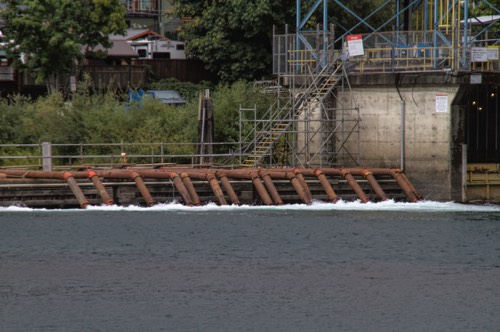
After a summer of drought, temporary pumps installed on the low dam across the natural outlet of Cowichan Lake go into operation in September to provide the Cowichan River with 4.5 cubic metres per second of water.
Meteorologists at Environment and Climate Change Canada offer some hope of relief as they warned of an approaching storm out on the Pacific Ocean west of Vancouver Island.
Strong winds and heavy rain are forecast, but the greatest amounts of precipitation are forecast for the western side of the island, and it's hoped that area includes the valleys with streams and creeks that flow into Cowichan Lake.
The Cowichan River is known internationally for its sport fishing, and in 2003 was designated a Canadian Heritage River.
The amount of water being pumped into the river is just enough to sustain aquatic life until the autumn rains return and replenish Cowichan Lake.
It's the second year the pumps have been used since 2019. Pulp and paper mill Catalyst Crofton, which holds the water licence, was also prepared to pump water into the Cowichan River in 2021, but then the autumn rains arrived in time to fill the lake.
As the water licence holder, Catalyst Crofton is responsible for managing the weir and ensuring an adequate flow of water for fish. The weir was built in 1957 to provide industrial water storage for the mill. It also provides water for part of the nearby town of Crofton.
The life-support analogy comes from Tom Rutherford, the Strategic Priorities Director of the Cowichan Watershed Board, a partnership between the Quwitsun First Nation and the Cowichan Valley Regional District.
He says 2023 has been a year of hard decisions regarding the management of the Cowichan River.
Rutherford says the first difficult choice was to reduce the flow from Cowichan Lake into the river in late June, dropping it from seven cubic metres per second to 4.5 CMS.
Then in mid-July, dead fish fry were discovered downstream from Skutz Falls in the Cowichan River.
An examination of the fish recovered indicates the die-off was the result of cumulative stress.
“Low water flows, high temperatures,” says Rutherford, “lead to a growth of algae, and when the algae starts to decompose it takes more oxygen out of the water and we actually ended up with a fish kill."
According to Rutherford, "we've been balancing on that knife edge for a number of years," and what happened in July was inevitable.
Then came the difficult decision to pump water over the weir in Lake Cowichan to maintain the river level for migrating salmon.
"That decision is not without its risks as well,” he says, “because we're lowering the lake level to lower than it's been, arguably, in geological time, which is having impacts on that productive shallow water perimeter around the lake," which he says is good habitat for fish.
The water pumped across the Cowichan Lake weir should be enough to support spawning salmon, and Rutherford says the present conditions in the Cowichan River are not ideal but should be adequate.
He says Chinook are in the river now, but spawning usually occurs in October, “so if the fish can get in the river and find somewhere to hold where they are somewhat protected from predation, the spawning activity generally picks up next month.”
With a heritage river on life support, the only cure is rain, enough to replenish Cowichan Lake and the river that depends on it.