Environment Equality Inclusiveness Action
Melting Glaciers Imperil Water Supply for Billions
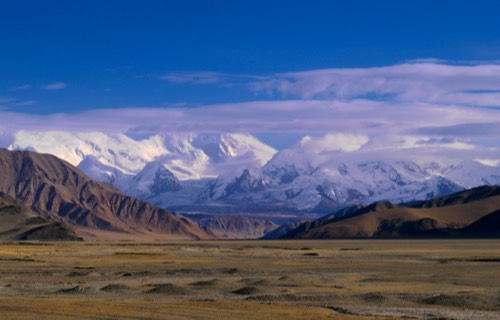
The One Planet – Polar Summit held from November 8-10 in Paris calls for urgent action to cut greenhouse gas emissions, more in-depth scientific research on the cryosphere, and greater integration of policy-making.
The cryosphere is all the frozen places on Earth.
The snow and ice, ice caps, glaciers, permafrost, and sea ice play a role in the climate by reflecting incoming solar radiation back into space.
The accumulation of greenhouse gases in the atmosphere is raising the global temperature and melting the snow and ice.
The loss of sea ice exposes more dark ocean water, resulting in less solar radiation getting reflected, leading to even more melting and exacerbating climate change.
The glaciers and snow-capped mountains of the world supply fresh water for billions of people.
The Himalayas, Karakoram, and the Hindu Kush, the highest mountain ranges in Asia, hold vast amounts of ice and snow and supply so much of the global population with water they collectively form a region known as the Third Pole.
The One Planet – Polar Summit supports the declaration of a United Nations Decade on Polar and Glacier Science Decade to commence in 2025 – the International Year of Glaciers’ Preservation.
The cryosphere is the “canary in the coal mine of climate and biodiversity,” according to Antje Boetius, Co-chair of the Scientific Advisory Board of the conference and Director of the Alfred Wegener Institute, Helmholtz Centre for Polar and Marine Research.
Massive ice loss in mountain glaciers in 2021 and 2022 was an average 20 per cent higher than the previous decade, and at least half of these glaciers could disappear by 2100.
Surface temperatures in the Arctic increased as much as four times more than the global average in the past four decades, and the loss of ice sheets in Greenland and Antarctica has increased four-fold in 30 years, contributing to average sea levels rising faster.
Rising global greenhouse emissions increase the scale and speed of the melting ice and thawing permafrost, heightening the risk of crossing thresholds and tipping points.
The summit warns of the ticking timebomb of melting permafrost and the release of vast quantities of methane, a significant greenhouse gas.
There is also concern about the retreat of high mountain glaciers.
Two billion people depend on high mountain glaciers for drinking water and crop irrigation and will suffer from the disastrous effects of global warming on rivers, agriculture, and electricity production.
The One Planet – Polar Summit issued the Paris Call for Glaciers and Poles. It includes a warning that the three-pronged challenges of climate change, biodiversity loss, and pollution leave no option but “cooperation to preserve the cryosphere.”
In the final communique, French President Emanuel Macron stated, “Climate change is already here and it’s a threat which is there and is getting worse by the minute. It is threatening millions already and soon billions of inhabitants.”
About a month before the summit, on October 12, the World Meteorological Organization issued a report warning the hydrological cycle is “spinning out of balance as a result of climate change and human activities,” and calling for additional investment in improved monitoring, data-sharing, cross-border collaboration and assessments of water resources.
According to the WMO State of Global Water Water Resources 2022 report, a fundamental policy shift is needed as we need more understanding of the condition of global freshwater resources.
WMO Secretary-General Prof. Petteri Taalas says the “overwhelming majority of disasters are water-related,” so better data sharing is necessary for meaningful early warnings and the coordinated and integrated water management policies essential for climate action.
Prof. Taalas says many countries targeted for priority action in Early Warnings for All, a United Nations initiative designed to ensure everyone gets protection from hazardous weather, water, or climate events through early warning systems, suffered floods or droughts in 2022.
“Not a single country had timely and accurate hydrological data available to support evidence-based decision making and early action.”
Water management and monitoring are essential to the global Early Warnings For All initiative.
Prof. Taalas warns that “glaciers and ice cover are retreating before our eyes,” with rising temperatures accelerating and disrupting the water cycle.
A warmer atmosphere holds more moisture, which means heavier precipitation episodes and flooding, more evaporation, dry soils, and more intense droughts at the opposite extreme.
According to the report, over 50 per cent of the global catchment areas in 2022 showed deviations from normal river discharge conditions, and most were drier than usual, while a smaller percentage displayed above or much above average conditions, similar to 2021.
The report notes the switch from La Niña in 2022 to El Niño conditions in 2023 will significantly affect the hydrological cycle.
“One of the most visible impacts of climate change is seen in the cryosphere,” according to Prof. Taalas, as glaciers and sea ice melt faster.
“Unfortunately the high concentration of carbon dioxide in the atmosphere means that melting of glaciers and sea level rise is expected to continue for the coming millennia.”
The WMO calls for better monitoring of the increasingly erratic water cycle as melting snow, ice, and glaciers have increased hazards like floods and threaten long-term water security.
"We cannot manage what we do not measure," according to the WMO State of Global Water Resources 2022 report, so there must be improved monitoring, data-sharing, cross-border collaboration, and assessments of water resources. The information is vital to help society cope with increasing water extremes of too much or too little.
The World Meteorological Organization report and the Paris Summit highlight concerns not only about the impact of global warming but also about whether policymakers understand the need to act quickly and decisively to reduce greenhouse gas emissions to ensure an essential element keeps flowing.